Reading list

Recommended books

The books we return to and recommend to our learners, chosen for students, professionals, business owners, trainers, leaders and educators. Filter by who you are or the skill you want to build.

Recommended for
Skill

44 books

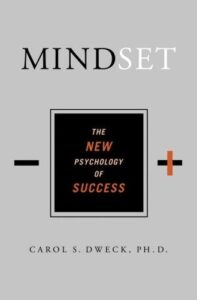
Mindset by Carol S. Dweck, book cover

Mindset & soft skillsLearning design

Mindset

The New Psychology of Success

Carol S. Dweck · 2006

Dweck contrasts a fixed mindset, which treats ability as a set amount to be proven, with a growth mindset, which treats it as something built through effort, strategy and feedback. She shows how each shapes the way people respond to failure, criticism and challenge in school, sport, work and relationships.

Why we recommend it. Gives students a language for setbacks, and gives teachers a way to praise process rather than talent.

A note on the evidence

Large later studies found the effect of short mindset interventions to be real but modest. Read it as a way of thinking, not a quick fix.

For: Students & job seekers · Educators & institutions

Steal the Show by Michael Port, book cover

Communication

Steal the Show

From Speeches to Job Interviews to Deal-Closing Pitches

Michael Port · 2015

Port, a former actor, applies performance techniques to the high-stakes moments of working life: interviews, pitches, presentations and difficult conversations. He covers playing a role authentically, rehearsing properly, managing nerves and structuring what you say.

Why we recommend it. Treats an interview as a performance you can prepare for, which removes much of the fear.

For: Students & job seekers · Young professionals

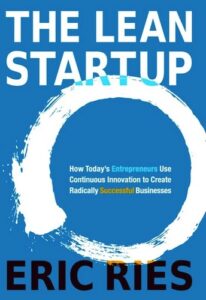
The Lean Startup by Eric Ries, book cover

Business buildingThinking & decisions

The Lean Startup

Eric Ries · 2011

Ries argues that new ventures fail less from poor execution than from building something nobody wants. His answer is the build-measure-learn loop: launch a minimum viable product, measure how real customers respond, and decide whether to persevere or pivot.

Why we recommend it. Teaches you to test an assumption cheaply before committing money to it, a habit useful far beyond start-ups.

For: Students & job seekers · Business owners

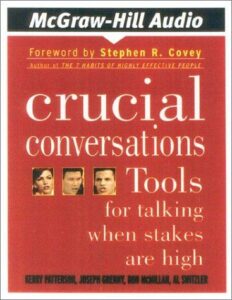
Crucial Conversations by Kerry Patterson, Joseph Grenny, Ron McMillan & Al Switzler, book cover

Communication

Crucial Conversations

Tools for Talking When Stakes Are High

Kerry Patterson, Joseph Grenny, Ron McMillan & Al Switzler · 2002

A crucial conversation is one where the stakes are high, opinions differ and emotions run strong. The authors show how to keep the conversation safe, separate facts from the stories we tell ourselves, and state a difficult view without making the other person defensive.

Why we recommend it. The most practical book we know on disagreeing well at work.

For: Students & job seekers · Young professionals · Leaders & executives

Man’s Search for Meaning by Viktor E. Frankl, book cover

Mindset & soft skills

Man’s Search for Meaning

Viktor E. Frankl · 1946

Frankl, a psychiatrist, recounts his years in Nazi concentration camps and observes that prisoners with a reason to live were more likely to endure. The second half introduces logotherapy: the idea that our deepest drive is for meaning, and that we always keep the freedom to choose our attitude.

Why we recommend it. A short book that puts every career setback in perspective.

For: Students & job seekers · Foundations for everyone

ExecutionLeadership

The Effective Executive

Peter F. Drucker · 1967

Drucker argues that effectiveness is a set of learnable habits: knowing where your time goes, focusing on contribution, building on strengths, doing first things first and making a few sound decisions. It applies to every knowledge worker, not only those with an executive title.

Why we recommend it. Nearly sixty years old and still the clearest guide to managing your own time and decisions.

For: Young professionals · Leaders & executives

Talk Like TED by Carmine Gallo, book cover

Communication

Talk Like TED

The 9 Public-Speaking Secrets of the World’s Top Minds

Carmine Gallo · 2014

Gallo studies hundreds of TED talks and distils nine principles grouped as emotional, novel and memorable: passion, storytelling, conversational delivery, teaching something new, a memorable moment, humour, brevity, multisensory experience and authenticity.

Why we recommend it. A clear checklist for any presentation, from a team update to a keynote.

For: Students & job seekers · Young professionals

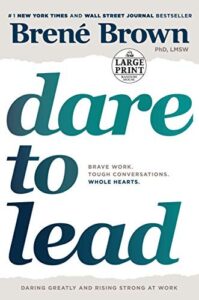
Dare to Lead by Brené Brown, book cover

LeadershipCommunication

Dare to Lead

Brené Brown · 2018

Drawing on her research and interviews with leaders, Brown argues that courageous leadership can be taught. She breaks it into four skill sets: working through vulnerability, living by clearly stated values, building trust and learning to recover from failure.

Why we recommend it. Turns “psychological safety” from a slogan into specific conversations a team can have.

For: Young professionals · Leaders & executives

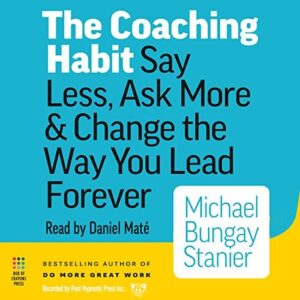
The Coaching Habit by Michael Bungay Stanier, book cover

LeadershipCommunication

The Coaching Habit

Say Less, Ask More & Change the Way You Lead Forever

Michael Bungay Stanier · 2016

Built around seven questions, from “What’s on your mind?” to “What was most useful for you?”, the book shows managers how to make coaching a short daily habit rather than a formal event, and how to stay curious a little longer before rushing to give advice.

Why we recommend it. Seven questions any manager can start using tomorrow.

For: Young professionals · Trainers & L&D · Leaders & executives

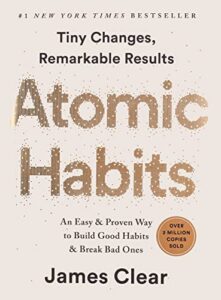
Atomic Habits by James Clear, book cover

ExecutionMindset & soft skills

Atomic Habits

James Clear · 2018

Clear argues that results come from systems rather than goals, and that small improvements compound. His four laws of behaviour change (make it obvious, attractive, easy and satisfying) give a practical method for building good habits and breaking bad ones, anchored in the person you want to become.

Why we recommend it. The most usable book on turning good intentions into a daily routine.

For: Students & job seekers · Young professionals

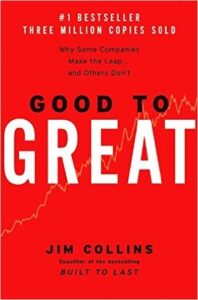
Good to Great by Jim Collins, book cover

Business buildingLeadership

Good to Great

Jim Collins · 2001

Collins’s team compared companies that moved from average to sustained outstanding results with similar companies that did not. The findings include Level 5 leadership, “first who, then what”, confronting the brutal facts, the Hedgehog Concept and the flywheel.

Why we recommend it. Gives owners a vocabulary for the disciplined choices behind lasting growth.

A note on the evidence

Several of the companies profiled later declined. Treat the findings as principles, not guarantees.

For: Business owners · Leaders & executives

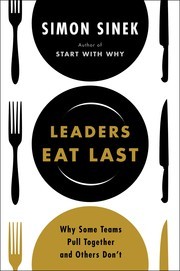
Leaders Eat Last by Simon Sinek, book cover

Leadership

Leaders Eat Last

Simon Sinek · 2014

Sinek argues that people do their best work when they feel safe inside their organisation, a “circle of safety” that leaders create by putting their people first. Cultures that reward short-term numbers over people erode the trust and cooperation that performance depends on.

Why we recommend it. A persuasive case that culture is a performance issue, not a perk.

For: Business owners · Leaders & executives

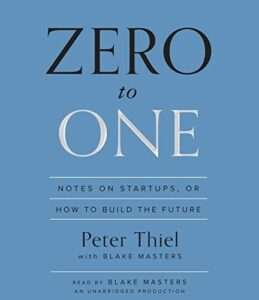
Zero to One by Peter Thiel with Blake Masters, book cover

Business buildingThinking & decisions

Zero to One

Notes on Startups, or How to Build the Future

Peter Thiel with Blake Masters · 2014

Thiel distinguishes copying what already works (one to n) from creating something new (zero to one). He argues that lasting businesses own something unique rather than competing on price, and asks a contrarian question: what important truth do very few people agree with you on?

Why we recommend it. Pushes owners to compete on difference rather than on discounts.

For: Business owners

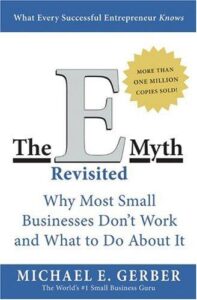
The E-Myth Revisited by Michael E. Gerber, book cover

Business buildingExecution

The E-Myth Revisited

Why Most Small Businesses Don’t Work and What to Do About It

Michael E. Gerber · 1995

Gerber argues that most small businesses are started by technicians who are good at the work but not at building a business. His remedy is to work on the business, not only in it: document systems so the business runs the same way whoever does the work, as a franchise does.

Why we recommend it. Essential reading for any founder who is still the bottleneck in their own business.

For: Business owners

Design for How People Learn by Julie Dirksen, book cover

Learning design

Design for How People Learn

Julie Dirksen · 2015

A visual, practical guide to instructional design grounded in how memory, attention and motivation work. Dirksen shows how to identify the real gap (knowledge, skill, motivation or environment), design for practice rather than information, and make learning last.

Why we recommend it. The most readable bridge from learning science to session design.

For: Trainers & L&D

Understanding by Design by Grant Wiggins & Jay McTighe, book cover

Learning design

Understanding by Design

Grant Wiggins & Jay McTighe · 2005

Introduces backward design: start with the understanding you want learners to reach, decide what evidence will show it, and only then plan the lessons. The six facets of understanding help teachers move from covering content to building understanding that transfers.

Why we recommend it. The standard framework for curriculum design in schools, colleges and universities.

For: Trainers & L&D · Educators & institutions

Kirkpatrick’s Four Levels of Training Evaluation by James D. Kirkpatrick & Wendy Kayser Kirkpatrick, book cover

Learning design

Kirkpatrick’s Four Levels of Training Evaluation

James D. Kirkpatrick & Wendy Kayser Kirkpatrick · 2016

The Kirkpatricks update the four-level model (reaction, learning, behaviour and results) and argue that evaluation should be planned backwards from the results an organisation needs. Their focus is supporting behaviour change on the job, where most of the value of training is won or lost.

Why we recommend it. Shows how to prove what a programme changed, not just that people enjoyed it.

For: Trainers & L&D · Educators & institutions

The Art and Science of Training by Elaine Biech, book cover

Learning design

The Art and Science of Training

Elaine Biech · 2016

Biech covers the full work of a trainer: needs analysis, design, delivery, facilitation, evaluation and professional growth, with tools and checklists drawn from decades of practice.

Why we recommend it. A complete reference for anyone moving from subject expert to professional trainer.

For: Trainers & L&D

Co-Active Coaching by Henry Kimsey-House, Karen Kimsey-House, Phillip Sandahl & Laura Whitworth, book cover

LeadershipCommunication

Co-Active Coaching

Henry Kimsey-House, Karen Kimsey-House, Phillip Sandahl & Laura Whitworth · 2018

The founding text of the Co-Active model, which treats every client as naturally creative, resourceful and whole. It teaches listening, intuition, curiosity, forwarding the action and self-management through practical exercises.

Why we recommend it. A rigorous grounding for trainers who want to coach, not only teach.

For: Trainers & L&D · Leaders & executives

Facilitator’s Guide to Participatory Decision-Making by Sam Kaner and colleagues, book cover

Learning designCommunication

Facilitator’s Guide to Participatory Decision-Making

Sam Kaner and colleagues · 2014

Built around the Diamond of Participatory Decision-Making, the book explains why groups struggle in the “groan zone” between open discussion and agreement, and gives facilitators techniques for listening, generating ideas, building shared understanding and reaching closure.

Why we recommend it. The best toolkit we know for running workshops that end in real decisions.

For: Trainers & L&D

The Adult Learner by Malcolm S. Knowles, Elwood F. Holton III & Richard A. Swanson, book cover

Learning design

The Adult Learner

Malcolm S. Knowles, Elwood F. Holton III & Richard A. Swanson · 2015

Knowles’s andragogy rests on a few assumptions about adults: they need to know why they are learning, they bring experience, they are ready to learn what helps them now, and they are motivated from within. The book links these principles to programme design and workplace learning.

Why we recommend it. Explains why lecturing professionals rarely works, and what to do instead.

For: Trainers & L&D

Emotional Intelligence by Daniel Goleman, book cover

LeadershipMindset & soft skills

Emotional Intelligence

Why It Can Matter More Than IQ

Daniel Goleman · 1995

Goleman popularised the idea that self-awareness, self-regulation, motivation, empathy and social skill shape success at work and in life, and that these capacities can be developed rather than simply inherited.

Why we recommend it. The book that put emotional intelligence on the leadership agenda.

A note on the evidence

Researchers dispute the subtitle’s claim. The case for developing these skills does not depend on it.

For: Young professionals · Leaders & executives

The Five Dysfunctions of a Team by Patrick Lencioni, book cover

Leadership

The Five Dysfunctions of a Team

Patrick Lencioni · 2002

Told as a fable about a struggling executive team, the book sets out five dysfunctions that build on each other: absence of trust, fear of conflict, lack of commitment, avoidance of accountability and inattention to results.

Why we recommend it. A simple model a leader can use to diagnose their own team in a single meeting.

For: Business owners · Leaders & executives

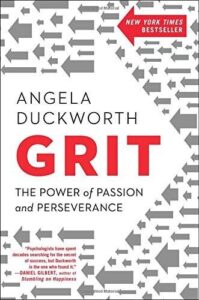
Grit by Angela Duckworth, book cover

Mindset & soft skills

Grit

The Power of Passion and Perseverance

Angela Duckworth · 2016

Duckworth argues that sustained passion and perseverance towards long-term goals predict achievement in many settings, and describes how grit grows through interest, deliberate practice, purpose and hope.

Why we recommend it. Helps educators talk about persistence instead of praising talent alone.

A note on the evidence

Later research found that grit overlaps heavily with conscientiousness and predicts success less strongly than the book suggests.

For: Students & job seekers · Educators & institutions
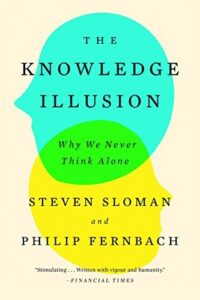
The Knowledge Illusion by Steven Sloman & Philip Fernbach, book cover

Thinking & decisions

The Knowledge Illusion

Why We Never Think Alone

Steven Sloman & Philip Fernbach · 2017

Two cognitive scientists show that individuals know far less than they think, relying on knowledge held by other people and by their tools. Asking people to explain how something actually works reduces their overconfidence.

Why we recommend it. A strong basis for teaching critical thinking and intellectual humility.

For: Leaders & executives · Educators & institutions
Meditations by Marcus Aurelius, book cover

Mindset & soft skillsLeadership

Meditations

Marcus Aurelius · c. 170–180

The private notes of a Roman emperor, written only for himself, on duty, self-discipline, mortality and acting well in what lies within our control. It remains the most accessible text of Stoic philosophy.

Why we recommend it. The philosophy behind the Aurelian name. First-time readers should start with the Gregory Hays translation.

For: Leaders & executives · Foundations for everyone

The Courage to Be by Paul Tillich, book cover

Mindset & soft skills

The Courage to Be

Paul Tillich · 1952

Tillich, a philosopher and theologian, examines the anxieties of death, meaninglessness and guilt, and argues for the courage to affirm oneself in spite of them, both as part of a community and as an individual.

Why we recommend it. Demanding but rewarding reading on authenticity, best for readers who valued Frankl.

For: Foundations for everyone

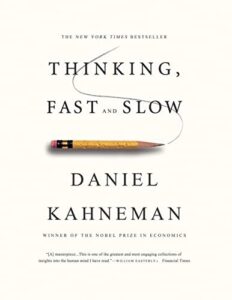
Thinking, Fast and Slow by Daniel Kahneman, book cover

Thinking & decisions

Thinking, Fast and Slow

Daniel Kahneman · 2011

Nobel laureate Kahneman describes two modes of thought: fast, intuitive System 1 and slow, deliberate System 2. He catalogues the biases that follow, including anchoring, availability, loss aversion and overconfidence, and what they cost our judgments and decisions.

Why we recommend it. The essential map of cognitive biases for anyone who makes decisions.

A note on the evidence

Some studies in the chapter on priming have not replicated, as Kahneman himself acknowledged. The core findings on heuristics and biases stand.

For: Leaders & executives · Foundations for everyone

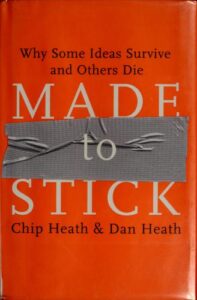
Made to Stick by Chip Heath & Dan Heath, book cover

Communication

Made to Stick

Why Some Ideas Survive and Others Die

Chip Heath & Dan Heath · 2007

The Heath brothers ask why some ideas are remembered and others forgotten, and answer with six principles: simple, unexpected, concrete, credible, emotional and stories.

Why we recommend it. Makes any message, whether a pitch, a lesson or a policy, easier to remember and act on.

For: Young professionals · Trainers & L&D · Educators & institutions
The Art of Thinking Clearly by Rolf Dobelli, book cover

Thinking & decisions

The Art of Thinking Clearly

Rolf Dobelli · 2011 (English edition 2013)

Dobelli, a Swiss writer and entrepreneur, describes 99 common thinking errors in short chapters of two or three pages each. They include confirmation bias, survivorship bias, the sunk cost fallacy, social proof and overconfidence. Each chapter names the error, shows it in an everyday situation and suggests how to guard against it.

Why we recommend it. The easiest way into cognitive biases: one short chapter a day, before moving on to Kahneman.

A note on the evidence

A light introduction rather than a research text. Some studies it cites have not held up in later research, and Nassim Taleb has said it borrows heavily from his work without credit.

For: Students & job seekers · Young professionals · Business owners

Never Split the Difference by Chris Voss with Tahl Raz, book cover

Communication

Never Split the Difference

Negotiating As If Your Life Depended On It

Chris Voss with Tahl Raz · 2016

A former FBI hostage negotiator applies “tactical empathy” to everyday negotiation: mirroring, labelling emotions, asking calibrated “how” and “what” questions, and aiming for the other side to say “that’s right”.

Why we recommend it. Practical negotiation for salaries, clients and suppliers.

For: Young professionals · Business owners

Nonviolent Communication by Marshall B. Rosenberg, book cover

CommunicationMindset & soft skills

Nonviolent Communication

A Language of Life

Marshall B. Rosenberg · 2003

Rosenberg offers a four-part process for honest, non-blaming communication: observations without evaluation, feelings, the needs behind them, and clear requests. He applies it to conflict at home, at work and in communities.

Why we recommend it. A simple structure for saying hard things without starting a fight.

For: Young professionals · Educators & institutions · Foundations for everyone

Thanks for the Feedback by Douglas Stone & Sheila Heen, book cover

CommunicationMindset & soft skills

Thanks for the Feedback

The Science and Art of Receiving Feedback Well

Douglas Stone & Sheila Heen · 2014

Most books teach how to give feedback. This one teaches how to receive it, explaining the three triggers that make us reject it (truth, relationship and identity) and how to get value even from feedback that is badly delivered.

Why we recommend it. Receiving feedback well is the skill that makes every appraisal useful.

For: Students & job seekers · Young professionals

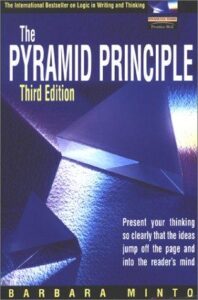
The Pyramid Principle by Barbara Minto, book cover

CommunicationThinking & decisions

The Pyramid Principle

Logic in Writing and Thinking

Barbara Minto · 1987

Developed while Minto trained consultants at McKinsey: lead with the answer, group the supporting arguments beneath it and order them logically. Her situation–complication–question opening frames any document for a busy reader.

Why we recommend it. The standard for clear business writing, reports and presentations.

For: Young professionals · Leaders & executives

How to Win Friends and Influence People by Dale Carnegie, book cover

Communication

How to Win Friends and Influence People

Dale Carnegie · 1936

Carnegie’s principles for dealing with people: take a genuine interest in others, remember names, listen, talk in terms of the other person’s interests, avoid arguments and admit your mistakes quickly.

Why we recommend it. The examples are dated; the principles are not.

For: Students & job seekers · Young professionals

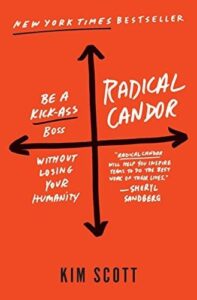
Radical Candor by Kim Scott, book cover

LeadershipCommunication

Radical Candor

Kim Scott · 2017

Scott argues that good bosses care personally and challenge directly at the same time. Her two-by-two separates radical candor from obnoxious aggression, ruinous empathy and manipulative insincerity, with practical advice on giving and asking for feedback.

Why we recommend it. For managers who avoid hard feedback because they want to be kind.

For: Young professionals · Leaders & executives

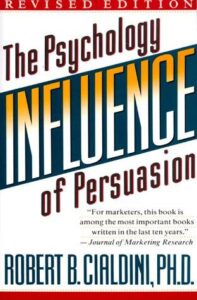
Influence by Robert B. Cialdini, book cover

CommunicationThinking & decisions

Influence

The Psychology of Persuasion

Robert B. Cialdini · 2021

Cialdini explains the principles behind why people say yes: reciprocity, commitment and consistency, social proof, liking, authority, scarcity and, in the expanded edition, unity.

Why we recommend it. Helps you persuade ethically and recognise when you are being manipulated.

For: Young professionals · Business owners

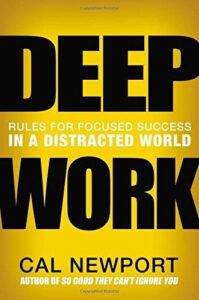
Deep Work by Cal Newport, book cover

Execution

Deep Work

Rules for Focused Success in a Distracted World

Cal Newport · 2016

Newport argues that the ability to focus without distraction on demanding work is becoming both rarer and more valuable. He offers rules for building it: schedule deep work, train your attention, use social media deliberately and limit shallow work.

Why we recommend it. The antidote to a working day spent answering messages.

For: Students & job seekers · Young professionals

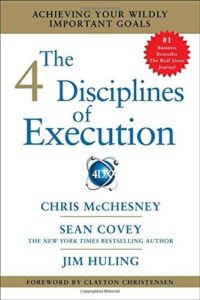
The 4 Disciplines of Execution by Chris McChesney, Sean Covey & Jim Huling, book cover

Execution

The 4 Disciplines of Execution

Chris McChesney, Sean Covey & Jim Huling · 2012

Strategies fail in the “whirlwind” of daily work. The four disciplines are to focus on the wildly important, act on lead measures, keep a compelling scoreboard and create a cadence of accountability.

Why we recommend it. A simple operating system for turning strategy into weekly action.

For: Business owners · Leaders & executives

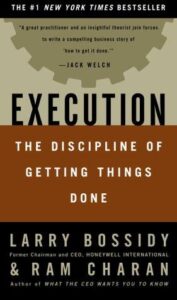
Execution by Larry Bossidy & Ram Charan, book cover

ExecutionLeadership

Execution

The Discipline of Getting Things Done

Larry Bossidy & Ram Charan · 2002

A chief executive and an adviser argue that execution is a discipline and the leader’s central job. They link three core processes (people, strategy and operations) and describe the leadership behaviours that make plans happen.

Why we recommend it. For leaders whose strategies look good on paper and stall in practice.

For: Business owners · Leaders & executives

High Output Management by Andrew S. Grove, book cover

ExecutionLeadership

High Output Management

Andrew S. Grove · 1983

Intel’s former chief executive defines a manager’s output as the output of their team and the teams they influence, and shows how to raise it through leverage, well-run one-to-ones and meetings, and matching management style to each person’s task maturity.

Why we recommend it. The most practical management book written by a practitioner.

For: Young professionals · Leaders & executives

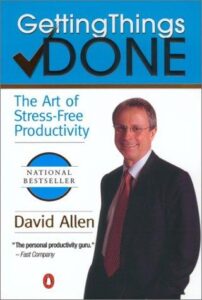
Getting Things Done by David Allen, book cover

Execution

Getting Things Done

The Art of Stress-Free Productivity

David Allen · 2001

Allen’s five steps (capture, clarify, organise, reflect and engage) move every commitment out of your head and into a trusted system, supported by the two-minute rule and a weekly review.

Why we recommend it. A dependable system for anyone juggling too many open tasks.

For: Students & job seekers · Young professionals

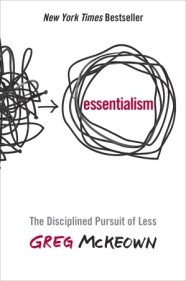
Essentialism by Greg McKeown, book cover

ExecutionMindset & soft skills

Essentialism

The Disciplined Pursuit of Less

Greg McKeown · 2014

McKeown argues for doing fewer things better. His three steps are to explore what matters most, eliminate the rest, including by saying no gracefully, and build routines that make execution easy.

Why we recommend it. Permission, and a method, to stop saying yes to everything.

For: Young professionals · Leaders & executives

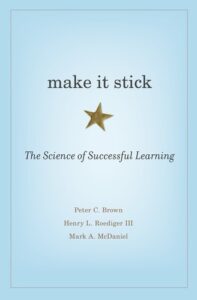
Make It Stick by Peter C. Brown, Henry L. Roediger III & Mark A. McDaniel, book cover

Learning design

Make It Stick

The Science of Successful Learning

Peter C. Brown, Henry L. Roediger III & Mark A. McDaniel · 2014

Two learning scientists and a writer show that rereading and highlighting create an illusion of mastery, while retrieval practice, spacing, interleaving and other “desirable difficulties” produce lasting learning.

Why we recommend it. Evidence-based study habits for students and teaching habits for educators.

For: Students & job seekers · Trainers & L&D · Educators & institutions
Let us design the program your people need.

A 30-minute discovery call to understand your audience, your goals and how success will be measured.

Chat with us